Akoya Pearls: The Japanese Standard of Perfection. Explained by a Gemologist
Of course. With great pleasure. Akoya pearls are the benchmark, the classic of the genre, and, without exaggeration, the most famous pearls in the world. When most people imagine the perfect pearl necklace, they see a strand of Akoya.
What are Akoya Pearls?
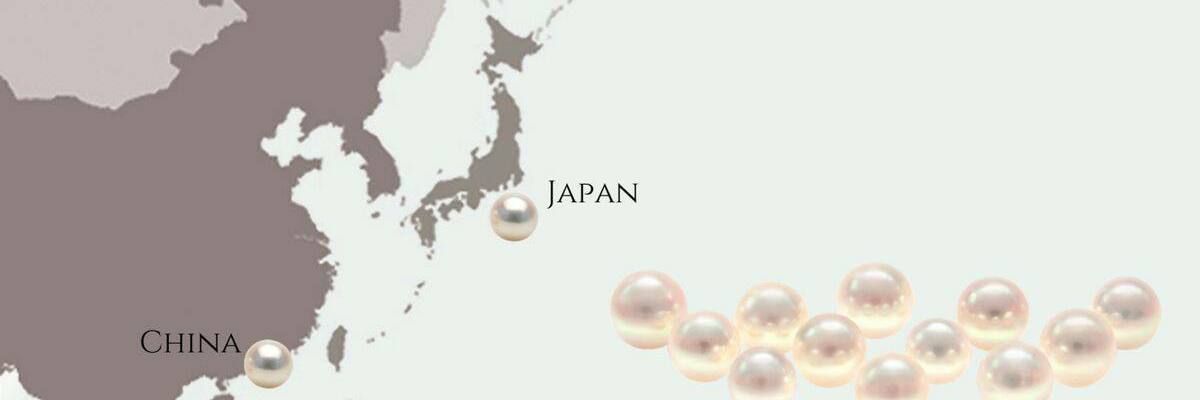
Akoya is not a brand and not a place, but a type of mollusk. Pinctada fucata martensii — this is the Latin name of the oyster in which these pearls are born. It is a saltwater cultured pearl, traditionally associated with Japan, although it is also grown in China, Vietnam, and South Korea.
But it is precisely Japanese Akoya, especially from the islands near the city of Nagoya (from which the word “Akoya” originates), that is considered the golden standard of quality.
History and the Role of Mikimoto
You cannot talk about Akoya without paying tribute to Kokichi Mikimoto. At the beginning of the 20th century, he was the first to patent the technology of successful pearl cultivation. His dream — “to adorn the necks of all the women in the world with pearls” — became reality thanks to this type. Mikimoto did not “invent” cultured pearls, but he perfected them and introduced them to the global market, making them a symbol of Japanese luxury and impeccable taste.
How are Akoya Pearls Grown?
The process is the quintessence of Japanese attention to detail.
- Selection: The healthiest and most mature oysters are chosen.
- Implantation: Into each oyster, an experienced technician (usually after years of training) carefully implants a bead nucleus made of mother-of-pearl and a small piece of mantle tissue from a donor oyster.
- Cultivation: The oysters are placed in clean, cool waters of Japanese bays, where they are regularly cleaned and brought to the surface for inspection. The growth period lasts from 8 to 24 months (most often 1.5–2 years).
- Harvesting: In winter, when the water is cold, nacre becomes the densest and the luster — the brightest. This is the ideal time for harvest.
The entire process is strictly controlled, which explains its high cost.
Characteristics: Why Are They So Valued?
The value of Akoya pearls is formed by several unique factors that are rarely found together in other types.
- Unparalleled Luster: This is its signature feature. Due to the ideal cultivation conditions (cold water) and the mastery of farmers, Akoya pearls possess the sharpest, brightest, mirror-like luster (“mirror” is the keyword). They don’t just shimmer — they produce a clear, distinct reflection. In Japan, this luster is called Teri — inner radiance, and Hana — flower, the play of light creating rainbow overtones on the surface.
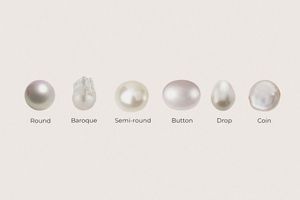
- Perfectly Round Shape: Akoya is the champion of perfectly round shapes. The percentage of flawless spheres in this type is the highest. This makes it indispensable for creating classic strands and earrings.
- Surface Purity: Although natural pearls always have minor irregularities, Japanese farmers achieve almost flawless, smooth surfaces in top-quality pearls.
- Size: Akoya pearls are rather modest in size. The range is usually 2–11 mm, with the most common and popular sizes for strands being 6–8 mm. Pearls larger than 8 mm are considered rare and are significantly more expensive.
Colors and Shades
The classic, of course, is white with various overtones:
- White with pink overtone: the most popular and feminine option. It gives the skin a warm, glowing radiance.
- White with cream/green overtone: a more restrained, classic European look.
- Silver
- Cream
- Pure white
More rarely, exquisite golden Akoya is found, cultivated mainly in China.
Quality Grading: The Japanese Approach
Japanese suppliers use a complex grading system. The most well-known grades are:
- Hanadama (“Flower Soul”): The highest possible grade. Has impeccable luster, minimal surface flaws, and nacre thickness of at least 0.4 mm. Often accompanied by a certificate from the Pearl Science Laboratory of Japan.
- AAA: Exceptional quality pearls. Perfect luster, 95% clean surface, nearly perfect round shape.
- AA+: High quality. Bright luster, 80% clean surface, minor flaws allowed.
- AA: Good quality. Good luster but noticeable surface imperfections.
How to Wear and Care for Them?
Akoya is the foundation of any jewelry wardrobe. It is ideal:
- As a mono-strand in several rows.
- In stud earrings or pendants.
- In combination with diamonds.
Care: Akoya is saltwater pearl and more delicate than freshwater pearls. The rules are standard: put them on after perfume and cosmetics, wipe with a soft cloth after wearing, store separately from other jewelry. With proper care, a strand of Akoya becomes a family heirloom, passed down through generations.
Conclusion: Why Is It Special?
Akoya pearls are not just jewelry. They are a symbol. A symbol of long labor, respect for tradition, Japanese striving for perfection, and timeless elegance. They do not shout about luxury — they quietly and confidently declare the impeccable taste of their owner.
These are pearls for your most important date, wedding, or business meeting. Pearls that speak for themselves.
I hope you now look at these perfect shimmering spheres with even greater understanding and awe.
Yours sincerely,
Your Gemologist